
The part is rarely the only thing you are paying for
Ask what a large composite mold costs and the material itself tells only part of the story. Traditional production can also involve pattern making, manual fabrication, machining, finishing, handling and weeks or months of lead time before the tool is ready to produce its first part.
For large tooling, prototypes and low-volume components, those surrounding processes can become a major part of the total cost.
Large-Format Additive Manufacturing, or LFAM, changes where some of those costs occur.
Rather than building a large geometry through multiple fabrication steps, thermoplastic LFAM can move directly from a digital model to a printed near-net-shape component. It does not make every large part cheaper. It does not eliminate machining, engineering or qualification. But in the right application, it can remove production steps, reduce tooling requirements and compress lead times dramatically.
That is where the economics become interesting.
What Is Thermoplastic LFAM?
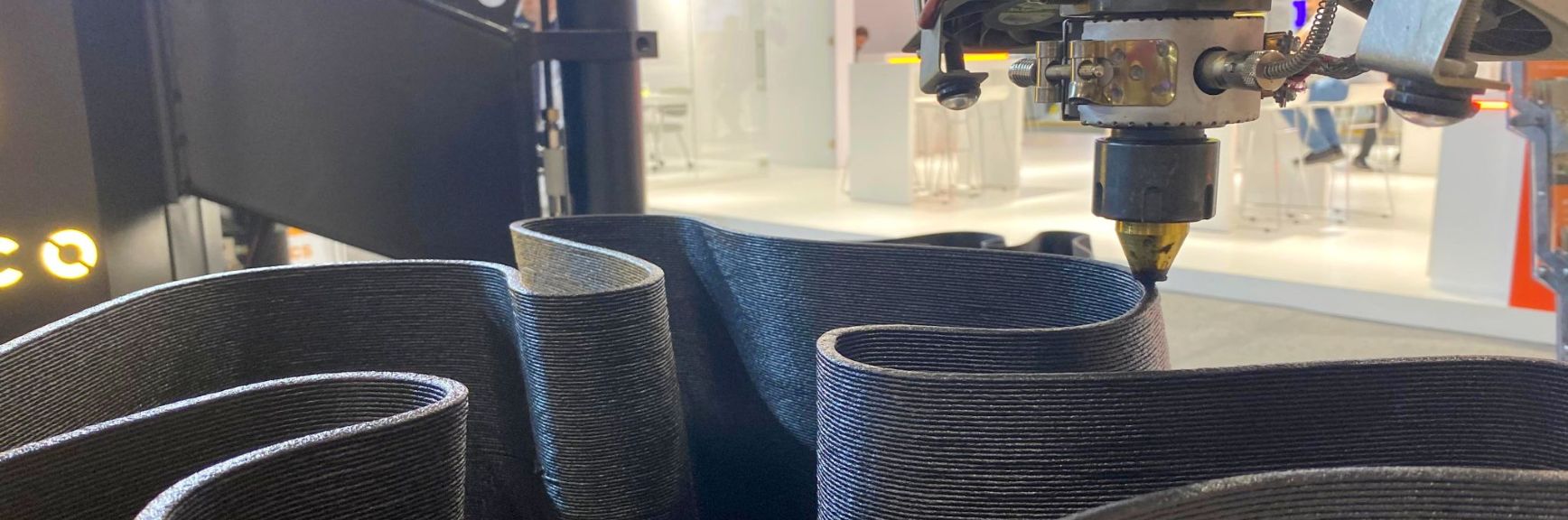
Thermoplastic LFAM is a form of large-scale additive manufacturing used to produce parts, molds, tools and prototypes that can measure several meters in size. In pellet-based systems, a screw extruder melts thermoplastic granulate and deposits material along a digitally generated toolpath. The extruder may be mounted on an industrial robot, gantry or other motion platform.
Unlike conventional desktop 3D printing, industrial LFAM is designed around much higher material deposition rates and significantly larger working envelopes.
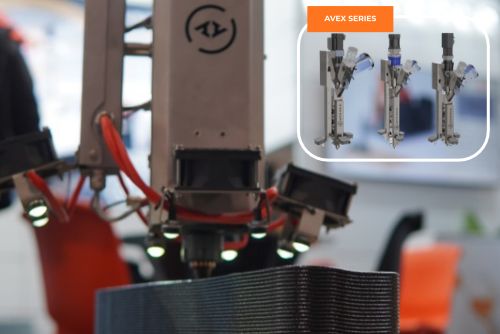
AVENCO’s AVEX thermoplastic extruder range, for example, provides rated output capacities of upto 50 kg/h, depending on the model, with printing temperatures of up to 450°C.
At those deposition rates, additive manufacturing becomes relevant not only to prototypes but also to large tooling, molds, patterns, fixtures and selected production components.
Where LFAM Can Change the Cost Equation
There is no single “LFAM saving.” The economic benefit normally comes from a combination of several areas.
Tooling
Traditional composite tooling can require a master pattern or plug before the final tool is produced. In suitable applications, large-format additive manufacturing can produce the mold or tooling geometry more directly from the digital model.
This is not theoretical.
In a U.S. Department of Energy project involving wind-turbine blade tooling, Oak Ridge National Laboratory (ORNL) reported that direct additive manufacturing eliminated the conventional plug stage from the mold-making process. Removing a manufacturing stage can reduce more than material cost. It may also reduce labor, handling, subcontracting and scheduling complexity.
Lead Time
For many industrial applications, time can be more commercially important than the price of the raw material. A particularly strong example again comes from ORNL. Researchers produced a composite wind-turbine blade mold in six weeks using large-scale additive manufacturing. ORNL stated that a comparable conventional mold typically required approximately six months.
That does not mean every LFAM tool will be produced ten times faster. It demonstrates something more useful: when a conventional workflow contains several tooling and fabrication stages, redesigning the process around additive manufacturing can substantially shorten the route from CAD data to a usable tool.
Material Utilization
Subtractive manufacturing begins with more material than the finished geometry requires and removes material until the final shape is achieved.
LFAM takes the opposite approach.
Material is deposited close to the intended final geometry and the printed component can then be machined where higher accuracy or surface quality is required. The result is often referred to as a near-net-shape manufacturing strategy. The important point is not that LFAM creates zero waste. It does not. Printed tooling and functional parts frequently require machining, trimming, drilling, sealing or other finishing processes. The opportunity is to avoid machining the entire geometry from an oversized starting block when printing the bulk shape is more efficient.
A 90% Cost Reduction. With the Right Context
One of the best-known examples of large-format polymer additive manufacturing came from Oak Ridge National Laboratory and the U.S. Navy.
In 2017, a 30-foot-long submersible hull demonstrator was manufactured using Big Area Additive Manufacturing technology. ORNL reports that the demonstrator was created in four weeks and that the additive approach reduced production costs by 90% compared with the conventional process used as the reference for that project. The number is impressive, but the context matters. This was a demonstration project using ORNL’s BAAM platform. It was not evidence that LFAM universally reduces manufacturing cost by 90%. What the project demonstrated was the impact that additive manufacturing can have when an entire large-part production workflow is redesigned around the technology.
That is a much more useful lesson for manufacturers than treating one percentage as a general industry benchmark.
Another Case: 75% Savings in Precast Tooling
A second example helps show that the economics are not limited to experimental vehicle structures. For the redevelopment of the Domino Sugar Refinery in Brooklyn, ORNL used large-scale polymer extrusion to manufacture carbon-fiber-reinforced thermoplastic molds for complex precast concrete façade components.
According to ORNL, each additively manufactured mold could be used for more than 200 concrete castings and delivered a 75% cost saving per mold compared with traditional wood molds. ORNL also notes an important qualification: the printed molds had a higher upfront cost, meaning their economics improved when many repeat castings were required. This is exactly how LFAM should be evaluated.
Not:
“Is 3D printing cheaper?”
But:
“For this production quantity, geometry, tooling requirement and lead time, which manufacturing route produces the better total result?”
Printed Does Not Mean Finished
One of the most important misconceptions around LFAM is that the part leaves the printer completely finished.
For many industrial applications, it does not. Large-format extrusion builds volume quickly, but printed surfaces retain the geometry created by individual deposited beads and layers.
Functional surfaces may still require machining to achieve the required finish, tolerance or fit. ORNL describes this combination of additive and subtractive manufacturing as an important part of producing large composite tools: additive manufacturing creates the large geometry quickly, while machining creates the functional surface quality the final application requires.
This leads to a practical manufacturing strategy:
Print the volume. Machine the precision.
For large molds and tooling, that hybrid approach can be considerably more relevant than asking whether additive manufacturing can replace CNC machining completely. In many cases, the two technologies work better together.
The Cost of Complexity Changes
Traditional manufacturing often makes complex geometry expensive. Curved surfaces, customized forms and frequent design changes can require additional tooling, patterns, machining or manual fabrication. Digital manufacturing changes part of that equation. When the main geometry is created from a digital toolpath, changing the design does not necessarily require rebuilding every physical production step from the beginning. That can make design iteration particularly valuable in applications such as:
- composite molds and tooling;
- marine components and molds;
- automotive prototypes and assembly aids;
- aerospace tooling;
- jigs and fixtures;
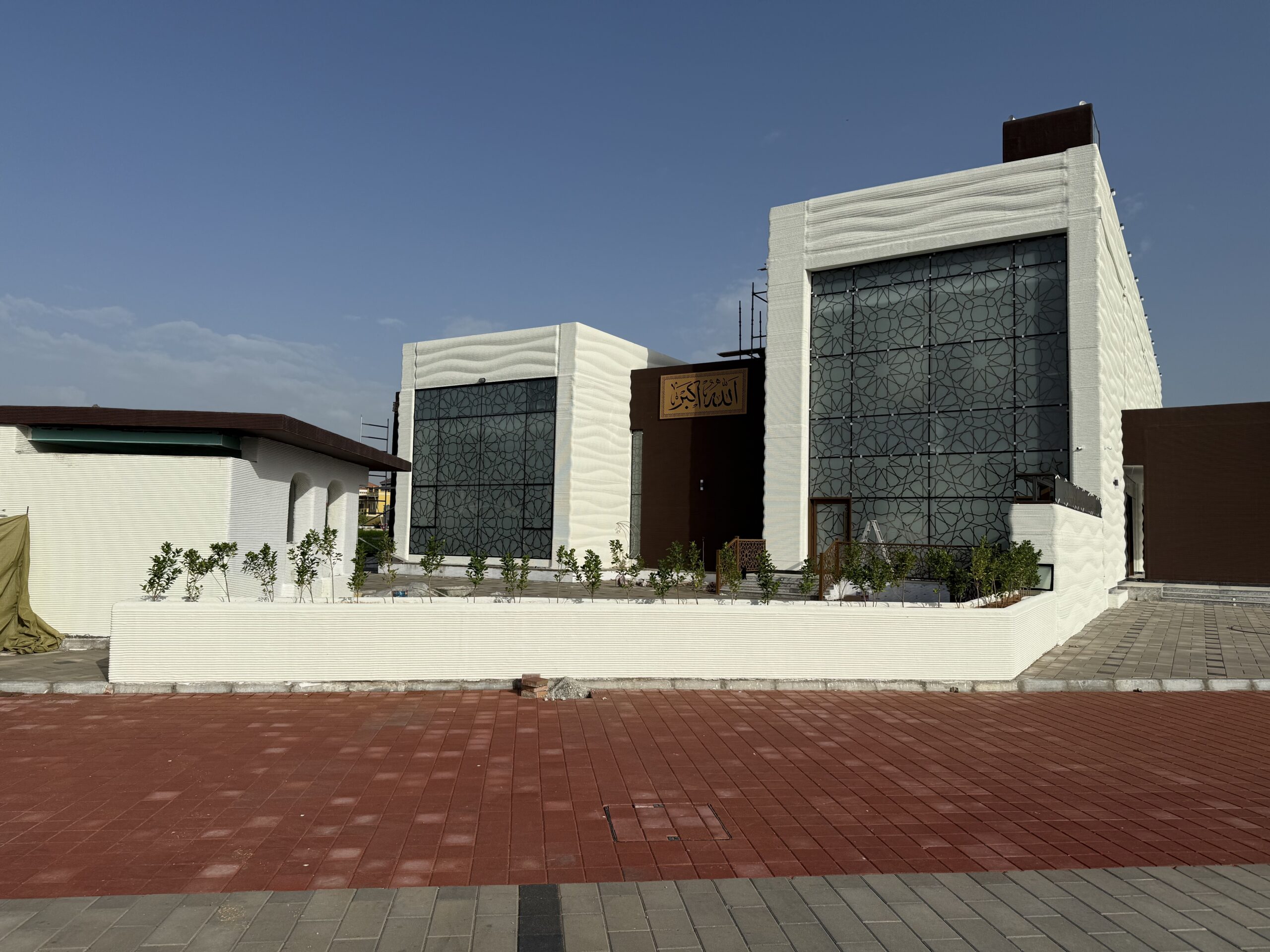
- architectural components;
- large prototypes and mock-ups.
These application areas are consistent with the industries currently targeted by industrial LFAM systems, including AVENCO’s AVEX platform. The economic benefit is therefore not limited to reducing the cost of an existing part.
LFAM can also reduce the cost of changing that part. For development-driven industries, that difference can be substantial.
Lower Tooling Cost Can Mean Faster Innovation
Consider a development team evaluating several versions of a large mold. With a conventional workflow, each significant geometry change may affect patterns, molds, subcontractors, fabrication schedules and machining. With a digital additive workflow, more of that change can take place in the CAD model and manufacturing toolpath. There is still engineering work involved. The material, deposition strategy, machining allowance, robot accessibility and final part requirements all need to be considered. But the physical cost of iteration can change significantly. This can make it economically practical to test designs that would previously have been abandoned because producing another large tool was too slow or expensive. That is one of LFAM’s less visible advantages. It does not only change manufacturing, it can change how quickly engineering teams are willing to experiment.
Utilization Determines the Business Case
A large-format additive manufacturing cell is a production asset. Like any production asset, its return depends heavily on how it is used. Buying an LFAM system for one demonstration part creates a very different financial case from operating the same system across multiple products and projects throughout the year. Manufacturers considering LFAM should therefore identify an application pipeline before focusing on maximum robot reach or extruder output. That pipeline might include:
composite molds → master models → jigs and fixtures → prototypes → architectural components → production tooling
The greater the number of suitable applications that can share the same manufacturing platform, the easier it becomes to spread the investment across productive machine hours. This is particularly relevant to robotic LFAM because the robot itself can support different geometries and workflows rather than being dedicated permanently to one product.
LFAM Is Not the Right Process for Every Large Part
A credible business case also requires understanding where the technology does not provide an advantage. Conventional manufacturing may remain more economical when:
- production volume is extremely high;
- an existing mold or tool is already available;
- the geometry is straightforward and inexpensive to fabricate;
- very tight tolerances dominate the entire component;
- the application requires a material or qualification route that is not suited to the selected LFAM process.
The objective should never be to print something simply because it can be printed. The objective is to identify where digital manufacturing removes enough cost, time or complexity to justify changing the production method.
Three Documented LFAM Lessons
The strongest evidence for LFAM economics does not point to one universal savings percentage. It shows three different ways value can be created.
- 90% production-cost reduction
ORNL’s 30-foot U.S. Navy submersible demonstrator showed what could happen when a large fabrication workflow was redesigned around additive manufacturing. - 75% tooling-cost reduction
The Domino Sugar Refinery project demonstrated the economics of reusable additively manufactured molds for repeated precast concrete production. - Six weeks instead of approximately six months
ORNL’s wind-turbine blade mold project demonstrated the potential lead-time impact of moving from conventional plug-and-mold fabrication toward direct large-scale additive tooling.
None of these should be presented as guaranteed LFAM results. Together, however, they provide strong real-world evidence that tooling cost and lead time can change substantially when the application is well suited to large-format additive manufacturing.
Robotic LFAM with AVENCO
 AVENCO develops robotic thermoplastic LFAM systems around the AVEX Series of industrial pellet extruders. The current AVEX range includes the AVEX15, AVEX20 and AVEX32, with rated output capacities of upto 50 kg/h and printing temperatures of up to 450°C. AVENCO integrates its extrusion technology with industrial robotic platforms and supports robotic manufacturing workflows using technologies including ENCY, Ai Build and Adaxis.
Systems can also combine additive manufacturing with robotic milling, allowing printed near-net-shape components to be finished within an integrated manufacturing workflow.
For companies evaluating LFAM, the starting question should therefore not be:
“How large can the robot print?” It should be: What are we producing today? What does the existing process really cost? How much of that cost comes from tooling, fabrication, material removal and lead time? And which of those steps could LFAM realistically change?
That is where the real business case begins.
From Large Parts to Digital Production
The most important question around LFAM is not whether additive manufacturing can replace traditional manufacturing. It is where it creates a better production model.
The strongest documented LFAM applications show that the opportunity can come from eliminating a tooling stage, reducing production time, extending tool reuse, simplifying complex geometry or shortening the path from a digital design to a physical part. That is why the economics of LFAM cannot be reduced to a single percentage.
For the right application, the technology can do something more valuable than simply reduce the cost of one part. It can change the economics of making large parts altogether.