
A 3D-Printed Home, Built with Standard Concrete: Inside the “Pluto” Modular House Project
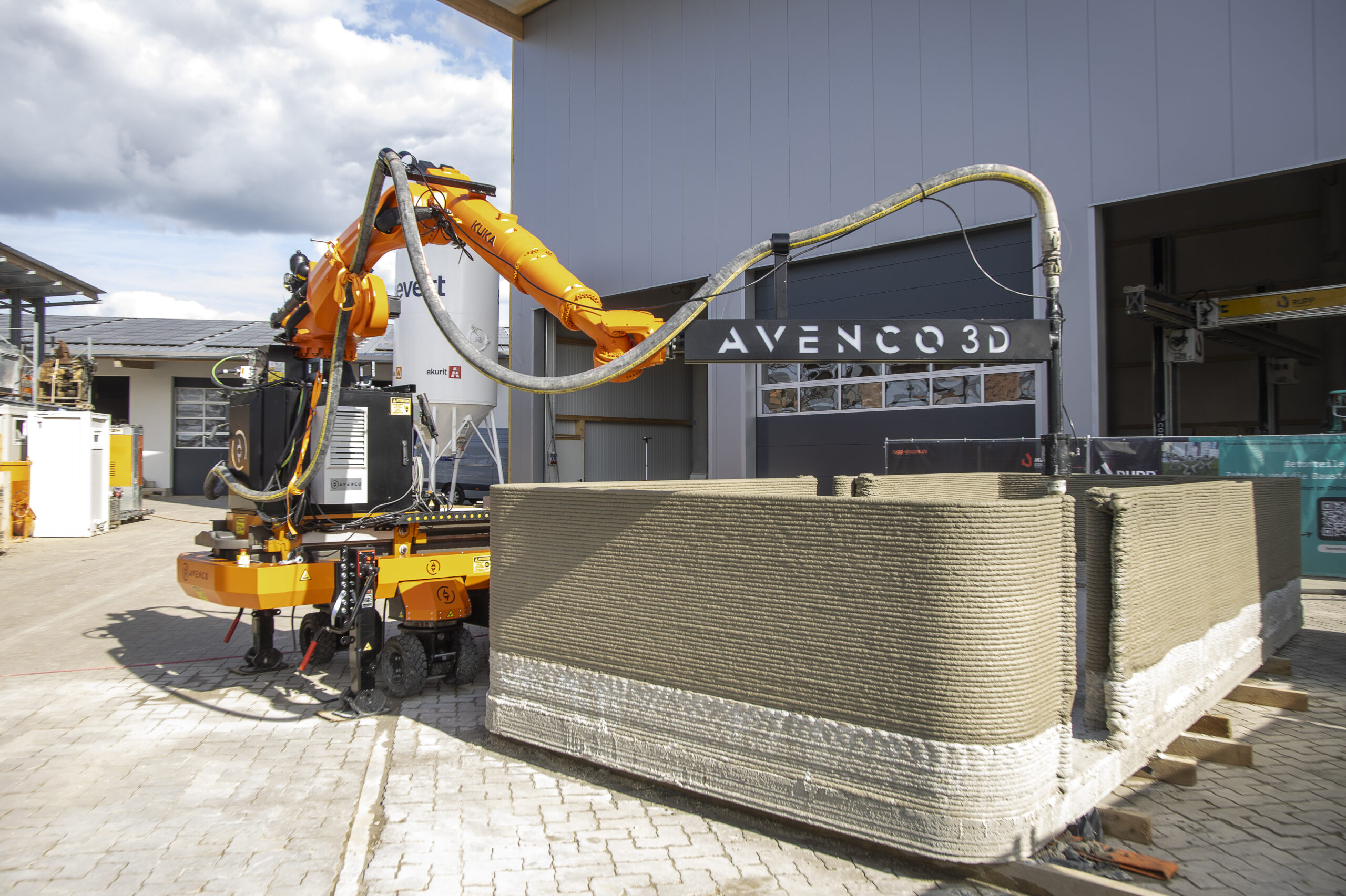
Most 3D-printed buildings you’ve seen in the news needed special concrete mixes, custom logistics, and a printer bolted to one fixed spot. The “Pluto” modular house, printed near Weißenhorn, Germany, breaks from that pattern on two fronts: it’s built with ordinary, standards-compliant concrete, and it was printed by a mobile 7-axis system that can move to wherever the job is.
That combination is the real story here. It’s also why the project, led by Rupp Gebäudedruck alongside Avenco, KUKA, m-tec mathis technik, and quick-mix, is being treated as a proof point for what construction-grade 3D printing can actually do outside a lab.
What Was Printed, and Why It Matters
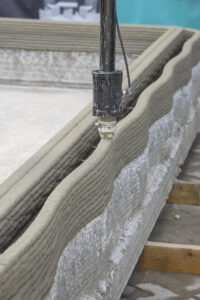
Pluto is part of Rupp Gebäudedruck’s “Ready4Space” line: a series of modular, prefabricated units designed for uses like guest houses, home offices, holiday homes, and tourism accommodation. At 23 square meters, Pluto is one of the more compact models in that lineup, but it carries the full architectural signature of the series: a gable roof and an exterior wall entirely produced through 3D printing, giving it a façade texture you don’t get from conventional formwork.
The unit is the first piece of what’s planned as a larger modular house development in the Weißenhorn region.
“Our goal is to move building printing out of its niche and into broad application. For that, we need solutions that are economical, flexible and practical. This project shows exactly that,” said Michael Oßwald, Managing Director of Rupp Gebäudedruck GmbH. “With the new printing system and standards-compliant concrete, we are creating the conditions to produce modular houses more efficiently and scalably in the future.”
The Technology: A Mobile 7-Axis System Built with KUKA
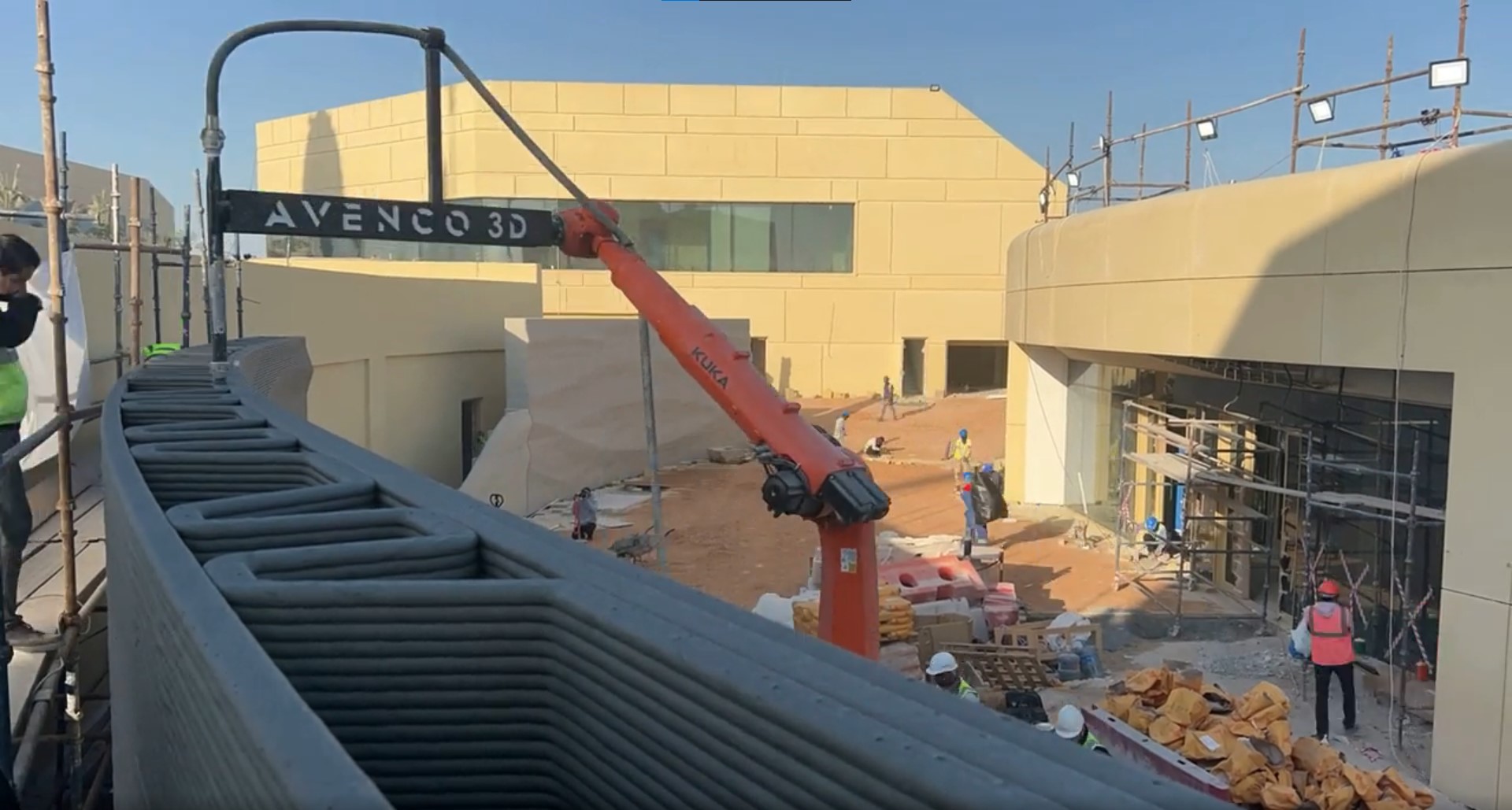
The printer behind Pluto is Avenco’s mobile 7-axis platform, developed in partnership with KUKA. Unlike fixed-gantry 3D construction printers. The kind that need a permanent structure built around them before printing can start. A mobile multi-axis system can be deployed directly on a job site and repositioned as the build progresses.
For Avenco, that mobility is the point.
“This project confirms what we set out to prove with our mobile 7-axis platform: that construction-grade 3D printing can move beyond fixed gantries and into real, flexible job sites,” said Berkay Dogan, Chairman of Avenco. “Working alongside KUKA and Rupp Gebäudedruck, we’ve shown that robotic additive manufacturing is ready for scalable, everyday use in the housing sector, not just as a proof of concept.”
m-tec mathis technik supplied the pumping technology that fed material to the printer, while quick-mix, a brand of Sievert, developed the standard concrete used in the build.
Why Printing with Standard Concrete Is a Bigger Deal Than It Sounds
3D concrete printing (3DCP) has typically depended on specially formulated mixes. Often proprietary, sometimes expensive, and rarely something a contractor can just order from a regular supplier. Pluto was printed with a standards-compliant concrete from quick-mix instead, which changes the economics in a very practical way: easier sourcing, simpler logistics, and none of the special handling that specialty mixes usually demand.
“The use of standard concrete opens up new possibilities for 3D building printing,” said Michael Oßwald. “It makes the technology more economical and more readily available. That is an important step on the way to broader market penetration.”
For anyone evaluating whether 3D concrete printing is viable at scale, not just as a showcase project, this is one of the clearer answers so far: yes, if the material can come off the shelf rather than out of a specialty batch plant.
A Partner Network, Not a Single Vendor
Pluto didn’t come out of one company’s printer. Rupp Gebäudedruck handled planning and print execution. Avenco and KUKA supplied the printing technology. m-tec mathis technik built the pumping system. Quick-mix developed the concrete. And the Rupp Group is now handling the module’s interior fit-out.
“Innovation happens where different areas of expertise come together,” said Oßwald. “This project impressively demonstrates the potential of strong partnerships. Together, we are developing technologies that can make construction faster, more flexible and more economical.”
The partners see Pluto as a reference point for what comes next. Both for the Weißenhorn modular house development and for future projects that need printing technology to actually show up and work outside a controlled demo environment.